
Background
HARO — Help a Reporter Out — is a media platform that connects journalists and reporters with expert sources. When a journalist needs a quote or insight for an article, they post a query. Sources pitch back. If chosen, the source gets quoted and linked to in the published piece. Those links are typically from high DA/TF/DR publications with strong referring domain counts — exactly the kind of editorial backlinks that move the needle.
We use HARO to pitch for topics in our own and our clients' niches, securing links from major publications that would be near impossible to get any other way.
A Brief History: HARO, Connectively & What's Happened Since
HARO has had a turbulent few years. Here's what happened:
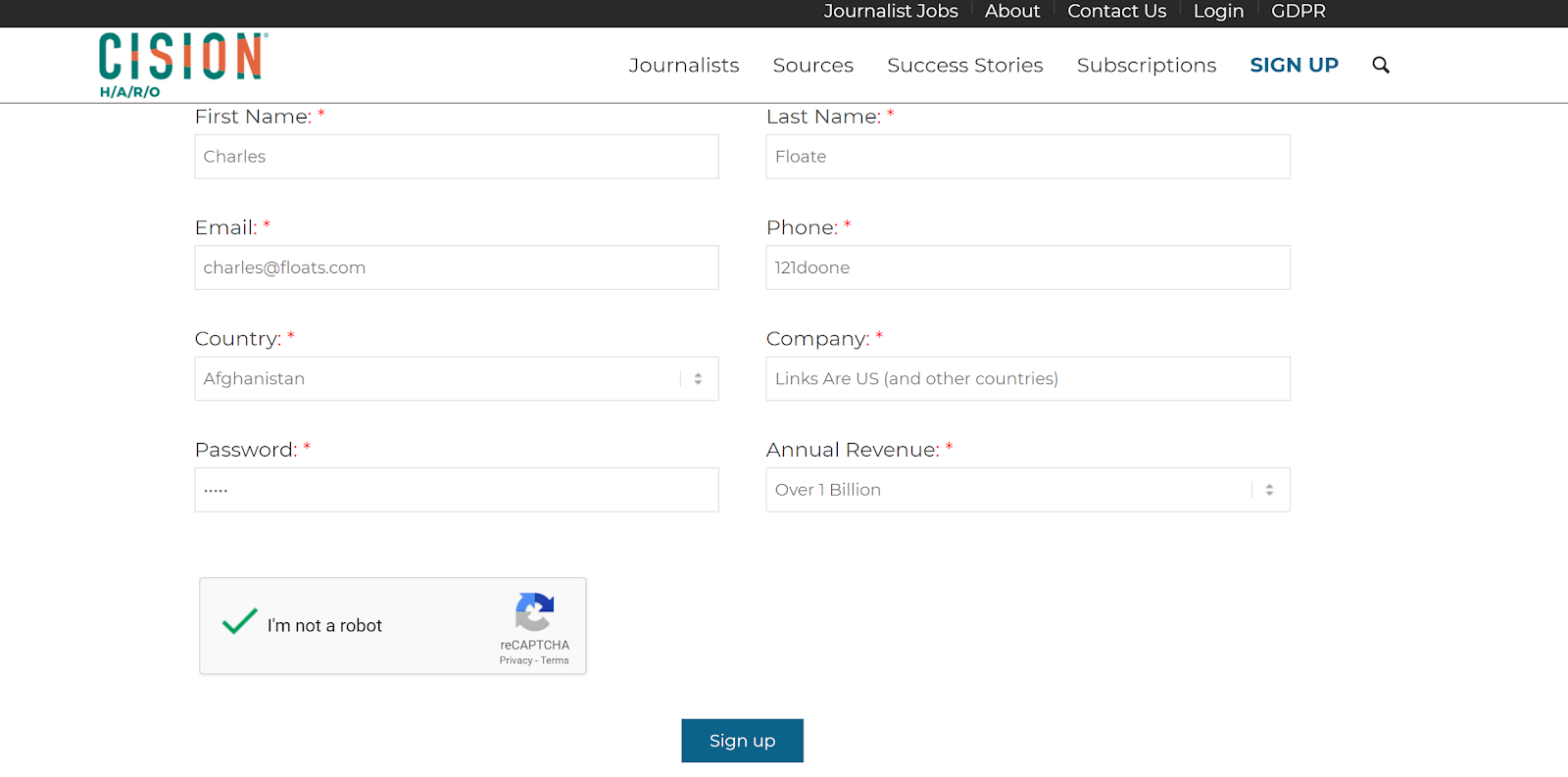


HARO is live and free again as of April 2025, now operated by Featured.com. Sign up at helpareporter.com — no paywalls, no complex dashboards.
Get Involved
To sign up visit helpareporter.com where you'll be asked to put in some basic details about yourself or your company. Click the activation email to confirm your account and you're in. No paid tiers, no dashboards to navigate.
The Process
HARO sends 3 collated email digests per day. The minutes are always 40 mins past the hour, regardless of timezone.
Sign up for the Master HARO digest if you want every category in one place. If you only work in one niche, select that category only and untick the rest.
Screening the HARO Newsletters
Scour the emails each day and identify opportunities you can credibly pitch for. Speed matters — the faster you respond the better. Some publications receive hundreds of replies and if the subject is broad, many answers will be similar. Often they take the first strong reply they get.
Not every query is worth your time. There are some outlets that are consistently easier to get links from — prioritise these when starting out or working to a tight schedule.
Aim to respond within 30 minutes to a few hours of the digest landing. Journalists are often on tight deadlines and may close their query the same day. Set up a dedicated HARO email folder and enable push notifications so you never miss a window.
Before Pitching a Journalist
If the query isn't in your area of expertise, ask a more qualified person in your business to answer quickly. If that's not possible, leave the opportunity — spamming journalists with inexperienced advice does more damage than good. The better the answer, the better your chances.
Always use your work or business domain email address. It's more professional than a personal Gmail or Hotmail and immediately validates who you say you are.
Run through this checklist before every pitch:
- Check the media outlet and journalist — look at their site and recent published articles
- Check whether the outlet gives follow links, no-follow links, or any links at all
- Check the DR/DA of the outlet — higher authority sites give more bang for your time, though lower DA sites can still be worthwhile
- Check you don't already have a link from that referring domain — new domains are always better than repeats
When Pitching HARO Queries
After the Pitch
Record everything on a tracking sheet. Log the outlet, journalist, subject line used, date sent and outcome. This lets you monitor success rates and tweak your approach — identifying which subject lines worked, whether faster responses yielded more links, and spotting patterns in what gets picked up.
You'll also get repeat opportunities on similar topics, so having previous replies on record means you can reuse and adapt rather than starting from scratch every time.
Occasionally a journalist will use your comments without notifying you. Take the text you submitted, paste it into Google and check for matches. You can also use search operators to search an author's recent articles specifically. This recovers links that would otherwise slip through the net.
If your pitch succeeds — keep the lines of communication open. Build a rapport where you can. Let them know they can come to you directly for future quotes in your niche. This lets you bypass the HARO queue entirely next time and can even open up guest blogging opportunities.
Once successful, update your tracking sheet — both to monitor trends in your winning pitches and to avoid pitching the same referring domain again if you already have a link from them.
The End — A HARO Win
When a pitch lands, celebrate — then get straight back to the sheet. Tracking your wins is what turns a handful of lucky links into a repeatable, scalable system. Over time the patterns become clear: the subject lines that work, the outlets that consistently convert, the niches where your expertise gives you the edge.
HARO link building takes consistency and attention to detail, but the results — editorial links from major publications that boost your domain authority and drive referral traffic — are among the most valuable you can earn in SEO.
Want Us To Do This For You?
At HaroHelpers we handle the entire HARO process — from screening queries to pitching journalists to tracking every link earned.
See How We Work →